

Abstract:
Weather patterns are changing rapidly around the world. Toronto summers are bringing more than just heat and humidity; they are bringing sudden, intense storms that overwhelm drainage systems and flood basements across the city. Alongside the extreme weather, aging infrastructure, clogged eavestroughs, sump pump failures, and foundation cracks all contribute to the rising risk. If you are wondering about the risk of flood damage in your home, be aware that it goes far beyond wet carpets. It can ruin drywall, warp flooring, spark electrical hazards, and create mold in as little as 48 hours.
In this blog, we explore the growing causes of basement flooding in Toronto, how water damages your home, and what property managers need to know to protect tenants. You’ll also learn about Go Pro Restoration’s 24/7 rapid response flood cleanup process and practical long-term prevention strategies, from backwater valves to waterproofing solutions.
Toronto’s Summer Storm Flashback
Summer in Toronto used to mean backyard barbecues, the ding-ding-ding of the passing ice-cream truck, and long evenings at the lake. Of course, you can still enjoy it all, but now, you also need to worry about frequent flash floods and waterlogged basements.
In July 2013, Toronto saw one of its worst floods on record, over 126 millimeters of rainfall in just a few hours, overwhelming the city’s sewage system and flooding thousands of basements across the GTA. Since then, climate experts and insurers alike have warned that severe summer storms are becoming more common. Preparation and preventative steps are the key to minimizing water damage from basement flooding in Toronto.
The Insurance Bureau of Canada reports that flood-related insurance claims have risen sharply over the past decade, with basement flooding making up a significant share. For homeowners, it means more than a mere inconvenience. You could potentially spend thousands of dollars on repairs, face health risks from mold exposure, and enter into unnecessary disputes with insurers over coverage.
Causes of Basement Flooding in Toronto
A basement flood isn’t a case of your luck running out. It’s a case of water running in, uninvited! Toronto homeowners are up against a mix of aging infrastructure, extreme weather, and property-specific issues. Understanding the causes is the first step toward preventing basement flooding in your Toronto home.
1. Outdated City Drainage Infrastructure
Toronto’s underground sewer and stormwater systems are decades old, and in many neighbourhoods, they were never designed to handle today’s weather extremes.
- Combined Sewer Systems: In older parts of Toronto (such as the downtown core and older suburbs), stormwater and sewage share the same pipes. During heavy rain, these systems quickly reach capacity, forcing excess water back into basements through floor drains or toilets.
- Insufficient Capacity: As rainfall events become more intense, overwhelmed city sewers leave water with nowhere to go but into the lowest levels of homes.
- Backflow Issues: Without a backwater valve, homeowners risk sewage-laden water backing up into basements, a situation that’s hazardous and also costly.
Key statistic: The City of Toronto has invested millions into sewer upgrades, but according to municipal reports, more than 40,000 properties remain at high risk for basement flooding due to outdated infrastructure. (source: City of Toronto – Basement Flooding Protection Program)
2. Urban Heat Island Effect and Climate Change
Toronto is Canada’s largest city and one with the densest population. More urban sprawl and more people mean more pavement, fewer permeable surfaces, and more trapped heat. This creates what’s known as the urban heat island effect, which intensifies summer storms.
- Warmer Air Holds More Moisture: Hotter city air can carry more water vapour. When storms break, that moisture is released as short, violent downpours.
- Localized Flash Flooding: Areas with limited green space, like midtown and downtown Toronto, experience rapid water pooling because asphalt and concrete prevent absorption.
- More Frequent “100-Year Storms”: Once-rare events now occur far more often. Environment Canada has documented a rise in intense rainfall events across Southern Ontario in recent decades.
For homeowners, this means basement flooding is not just a seasonal risk. It can occur anytime, and it’s worsening every year.
3. Eavestroughs, Downspouts and Foundation Drainage
Sometimes flooding starts closer to home, literally at the roofline.
- Clogged Eavestroughs: Leaves and debris block gutters, causing water to overflow directly against exterior walls.
- Improper Downspout Placement: Downspouts that empty too close to the foundation dump thousands of litres of water right where it can seep into basements.
- Disconnected Downspouts: While the City of Toronto mandates downspout disconnection from storm sewers, some homeowners have incomplete or poorly executed disconnections that actually worsen drainage issues.
These small maintenance oversights can make the difference between a dry basement and a flooded one.
4. Basement Window Wells and Grading Issues
Usually, basement windows are installed below ground level, protected only by small window wells.
- Poorly Drained Wells: If wells aren’t equipped with drains or gravel fill, rainwater collects like a bucket and spills directly into the basement.
- Improper Lot Grading: Many Toronto homes, especially in older neighbourhoods, have settled over time. Instead of sloping away from the house, lawns and patios slope toward it, funneling water against foundations.
Combined, these issues put extra strain on foundation walls and increase seepage risk.
5. Foundation Cracks and Structural Wear
Even small cracks in basement walls or floors can become major entry points during summer storms.
- Hydrostatic Pressure: Heavy rain saturates the soil, creating immense pressure against foundation walls. Weak spots and cracks let water seep inside.
- Older Foundations: Many Toronto homes built before the 1980s lack modern waterproofing membranes or weeping tile systems, making them more vulnerable to seepage.
- Recurring Damage: Once water has entered through a crack, freeze-thaw cycles in winter make the crack worse, and cause your flooding risk to return year after year.
6. Sump Pump Failures and Power Outages
Even homes equipped with sump pumps are not immune to basement flooding.
- Overwhelmed Pumps: Intense storms can overwhelm pumps, especially if they are undersized.
- Power Outages: Severe weather can sometimes knock out power, leaving sump pumps useless when they are needed most.
- Lack of Maintenance: Pumps that are not tested and maintained regularly may fail without warning.
Installing a battery backup sump pump is one of the most effective ways to protect against this all-too-common scenario.
7. Sewer Backups and Sanitary System Overload
One of the most dangerous causes of basement flooding is a Category 3 water event raw sewage backing up into a basement.
- Sanitary Sewers Overloaded: Heavy rains force sewage water into basements through floor drains.
- Health Risks: This water is grossly unsanitary, requiring professional cleanup, disinfection, and often full removal of affected materials.
- Insurance Complications: Many policies require a sewer backup rider for coverage, leaving unprepared homeowners footing the bill.
The takeaway: Basement flooding in Toronto is rarely caused by a single factor. It’s the combination of city-wide drainage challenges, climate-driven storms, and home-level vulnerabilities that puts so many properties at risk.
How Flooding Damages Your Property
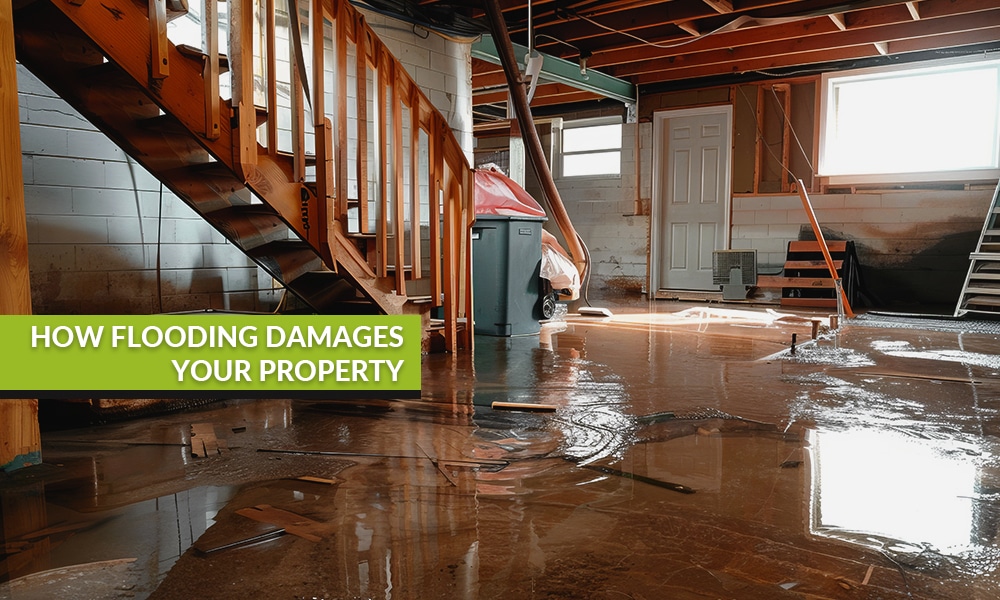
A flooded basement is never just “a little water.” Even a few centimeters of standing water can set off a chain reaction of damage that affects your home’s safety, its value, and your family’s health. The impact worsens the longer water is allowed to sit, which is why Go Pro stresses immediate action when basement flooding occurs.
1. Damage to Drywall and Insulation
Basement finishing typically uses drywall and fiberglass insulation, both of which are highly porous.
- Absorption: Drywall acts like a sponge, soaking up water quickly. Within hours, water can wick upward from the floor, saturating walls well above the initial flood line.
- Irreversible Damage: Once saturated, drywall loses its structural integrity, which can lead to crumbling or warping. Insulation, meanwhile, compacts and loses its thermal properties.
- Mold Growth: Damp drywall and insulation provide the perfect medium for mold to form within 24-48 hours, hidden behind walls where it spreads unnoticed.
2. Flooring and Subfloor Destruction
Not surprisingly, flooring materials are commonly the first casualties of basement flooding.
- Carpet and Underpadding: Carpets trap floodwater deep within fibers and padding. Even if surface water is extracted, residual dampness remains, making mold inevitable.
- Hardwood Flooring: Hardwood and engineered wood swell, buckle, and warp when saturated. Specialty drying techniques can sometimes save hardwood, but replacement is necessary most of the time.
- Laminate Flooring: Laminate typically delaminates and bubbles after water exposure, making it unsalvageable.
- Concrete Slabs: While concrete looks solid, it’s porous. Water seeps in, contributing to long-term moisture problems if not properly dried.
3. Structural Damage and Foundation Stress
What is visible and most obvious is the damage to finishes, but flooding threatens the entire structural core of your home.
- Hydrostatic Pressure: After heavy rainfall, saturated soil exerts pressure on foundation walls. Neglected or unnoticed cracks expand, allowing water in.
- Weakened Supports: Wooden framing and joists can absorb water, compromising their strength over time.
- Long-Term Settlement: Repeated flooding softens soil around the foundation, potentially leading to uneven settlement and structural instability. In severe cases, foundation walls can bow inward or shift, requiring major repairs.
4. Electrical and Mechanical Risks
Basements tend to house critical systems for your home: furnaces, hot water tanks, laundry equipment, and electrical panels.
- Short Circuits and Fire Hazards: Water and electricity are a dangerous mix. Even shallow flooding can reach outlets or wiring, creating risks of shock or fire.
- Damaged Appliances: Furnaces, washers, dryers, and freezers may require replacement if submerged.
- HVAC Contamination: Ductwork exposed to floodwater can spread contaminants and spores throughout the house.
5. Rapid Mold Development
One of the most serious consequences of flooding is the almost immediate risk of mold.
- Timeframe: Mold spores begin colonizing wet surfaces within 24-48 hours.
- Spread: Once airborne, spores can circulate through the HVAC system, affecting the entire home.
- Health Impact: Health Canada warns that prolonged mold exposure can lead to asthma, chronic cough, sinus infections, and other respiratory issues.
6. Damage to Personal Belongings
When water invades your home, it leaves an unsightly mess. What’s worse is that it feels like an intrusion into your safe space. Beyond structural concerns, flooding takes an emotional toll by destroying personal possessions. The stress of watching memories and hard-earned belongings wash away can be overwhelming.
- Furniture and Upholstery: Sofas, chairs, and mattresses absorb water and contaminants, making them unsafe.
- Stored Items: Cardboard boxes, books, electronics, and clothing stored in basements may be unsalvageable.
- Sentimental Losses: Photo albums, keepsakes, and heirlooms stored at floor level might be irreparably damaged.
Go Pro offers content inventory, cleaning, and packing services, helping you salvage what can be saved in your home in the aftermath of a basement flood.
7. Lingering Odours and Secondary Damage
Even after water is removed, musty odours and secondary damage can persist if the drying process isn’t thorough.
- Microbial Growth: Damp conditions support bacteria and mold, creating long-lasting odours.
- Air Quality Issues: Poor remediation leaves behind elevated humidity, condensation, and recurring mold.
- Resale Value: Homes with a history of water damage that wasn’t professionally remediated can lose resale value due to visible damage and inspection red flags.
The bottom line: Basement flooding is more than water intrusion. It’s the chain reaction of damage it triggers if not dealt with immediately by trained, experienced professionals using the right equipment and proven methodology. From mold growth and structural weakening to electrical hazards and personal loss, the risks are serious and costly.
That’s why Go Pro Restoration Toronto emphasizes rapid response, complete structural drying, and eco-safe disinfection to fully restore properties after a flood.
Basement Floods and a Property Manager’s Perspective
For Toronto property managers, basement flooding is a nuisance that can quickly become a complex, multi-unit crisis. Unlike single-family homeowners, property managers are responsible for protecting dozens, sometimes hundreds, of tenants and their belongings, while also safeguarding the building’s long-term value.
1. Drainage and Infrastructure Planning
In multi-unit residential and commercial properties, flooding can occur when shared drainage systems back up. As a property manager, you must:
- Schedule regular inspections of storm drains, sump pumps, and catch basins to ensure they remain functional.
- Maintain clear records for compliance and insurance purposes.
- Coordinate with city services when municipal sewer capacity is a known issue in the neighbourhood.
Even a blocked catch basin in a parking lot or exterior stairwell can funnel water directly into a building’s lower levels.
2. Sump Pump Maintenance and Redundancy
For many building structures, sump pumps are the first line of defense against basement flooding, but property managers must go further than the average homeowner:
- Testing Protocols: Pumps should be tested monthly, not just during storm season.
- Battery Backup Systems: Because storms are known to cause power outages, backup pumps with battery or generator power are critical.
- Redundant Systems: In large buildings, multiple pumps working in tandem are necessary.
A failed sump pump in a multi-unit property can mean water intrusion across shared laundry rooms, storage areas, and mechanical rooms. Containing water damage is the first step to preventing rapid spread and saving thousands of dollars in restoration.
3. Protecting Common Areas and Building Systems
Flood-prone basements in apartment buildings and condos typically house essential systems, including:
- Electrical panels and mechanical equipment
- Boiler or chiller rooms
- Shared laundry facilities
- Tenant storage units
A single flood event can cause damage that disrupts dozens of households. In some cases, it can even make a building temporarily uninhabitable until remediation is complete.
4. Tenant Safety and Communication
When flooding occurs in multi-unit buildings, the responsibility extends beyond physical damage. For properties that you manage, you must also:
- Ensure tenant safety by restricting access to wet areas.
- Provide clear communication on timelines for remediation and insurance processes.
- Manage expectations, especially when tenants’ personal belongings are affected by water damage.
Failing to act quickly not only risks mold growth but also exposes property owners and managers to liability claims from frustrated tenants.
5. The Go Pro Advantage for Property Managers
Go Pro Restoration has extensive experience working with Toronto’s property managers and building operators:
- 24/7 Emergency Response: Our teams arrive within one hour, limiting tenant disruption.
- Documentation for Insurance: We provide detailed moisture mapping, photographs, and reports to streamline claims.
- Full-Service Restoration: From water extraction to reconstruction, we handle every stage, reducing stress for managers.
- Multi-Unit Experience: Our technicians are trained to contain and remediate damage across complex, shared infrastructure without cross-contaminating unaffected areas.
For Toronto property managers, proactive flood planning is just as important as emergency response. Partnering with a professional restoration company like Go Pro Restoration ensures that when storms hit, both your property and your tenants have protection against water infiltration and the resultant widespread damage.
Go Pro Restoration’s Rapid Response Flood Cleanup
When a basement floods, every minute counts. The longer water sits, the more damage spreads, soaking into drywall, warping flooring, and creating the perfect conditions for mold. That’s why Go Pro Restoration’s Toronto team is on call 24/7, with guaranteed 1-hour arrival across the GTA.
Here’s how our team restores flooded properties:
1. Emergency Arrival and Assessment
- Rapid on-site arrival within one hour.
- Using thermal imaging cameras and moisture meters, our technicians identify visible and hidden water damage.
- We share a clear action plan immediately with homeowners or property managers.
2. Water Extraction and Pump-Out
- High-powered pumps and vacuums quickly remove standing water.
- This step stabilizes the property and prevents further damage.
3. Removal of Damaged Materials
- Wet drywall, insulation, flooring, and other non-salvageable materials are safely removed.
- This ensures faster drying and prevents mold development.
4. Structural Drying and Dehumidification
- Commercial-grade dehumidifiers and air movers target moisture in walls, floors, and framing.
- Specialized systems, like Injecti-dry for hardwood floors, may be deployed when needed.
- Technicians make daily visits to monitor moisture levels and adjust equipment until everything is fully dry.
5. Sanitization and Antimicrobial Treatment
- We treat surfaces with eco-friendly disinfecting agents that are safe for families and pets.
- Antimicrobial agents are applied to stop bacterial growth and reduce odours.
6. Documentation and Insurance Support
- In complete transparency, we provide detailed records, including photos and moisture logs.
- Go Pro works directly with insurance providers to streamline the claims process.
7. Restoration and Reconstruction
- Once drying is complete, our team can restore damaged areas, from replacing drywall and flooring to full property reconstruction.
Why Choose Go Pro Restoration:
- Available 24/7 with one-hour response times.
- Certified technicians using advanced equipment and eco-friendly products.
- End-to-end service: from water extraction to full property restoration.
- Insurance support that reduces stress for homeowners and property managers.
Long-Term Flood Prevention
Cleaning up after a flood is critical, but the real goal for Toronto homeowners and property managers is making sure it doesn’t happen again. With summer storms intensifying and drainage systems under strain, proactive flood prevention is the smartest investment you can make.
Here are proven strategies to reduce your risk of basement flooding:
1. Backwater Valves: Your Basement’s First Line of Defense
- A backwater valve is installed on the main sewer line to stop sewage from backing up into your basement during heavy rainfall.
- The City of Toronto actively recommends and even offers subsidies for installation because it’s one of the most effective defenses against sewer backups.
- For older Toronto homes connected to combined sewers, this is especially important.
2. Sump Pump Systems with Backup Power
- A sump pump collects groundwater around your foundation and pumps it safely away.
- Battery or generator backups ensure it works even during power outages, a common occurrence during major summer storms.
- Regular maintenance and testing are critical. Our team sees many instances of failure caused simply by the lack of upkeep.
3. Foundation Waterproofing and Drainage Upgrades
- Seal cracks in foundation walls and floors to prevent water seepage.
- Exterior waterproofing membranes and weeping tile (French drain) systems help redirect water away from your home before it gets inside.
- Consider installing interior drainage solutions if excavation isn’t possible.
4. Roof Runoff and Eavestrough Management
- Keep gutters and downspouts clear of debris, especially before storm season.
- Extend downspouts at least two meters away from your foundation to prevent pooling water.
- Grading your yard will allow water to naturally flow away from the house.
5. Window Well Protection
- Install window well covers to keep rainwater from pooling around basement windows.
- Ensure wells are equipped with proper drainage (such as gravel or small drains) to avoid overflow.
While Toronto’s storms and city infrastructure are outside your control, there are many steps you can take at the property level to prevent water from entering your basement. From simple fixes like downspout extensions to bigger investments like backwater valves, proactive prevention saves money, stress, and potential health hazards down the road.
Toronto Summer Flood Prevention Checklist
Toronto summers bring welcome sunshine. What’s not welcome is the sudden, heavy storms that can overwhelm city sewers and residential drainage systems. The best way to protect your basement is to be proactive. Use this checklist to prepare your home before storm season hits.
Daily and Weekly Habits
- Check for leaks under sinks and around basement plumbing fixtures.
- Keep floor drains clear of dust, debris, or stored items.
- Walk around the house after rainstorms to look for pooling water near the foundation.
Monthly Maintenance
- Test your sump pump by pouring a bucket of water into the pit to ensure it activates properly.
- Check for foundation cracks inside and outside the basement and seal any minor gaps.
- Inspect window wells to ensure they are draining properly (no pooling water).
- Clean or replace HVAC filters so humidity is properly managed indoors.
Pre-Storm Season Prep (Spring and Early Summer)
- Clear eavestroughs and downspouts of leaves and debris.
- Extend downspouts at least 2 meters from your foundation.
- Make sure your yard slopes away from the house to prevent water from flowing toward the basement walls.
- Install or check your backwater valve to prevent sewer backup.
- Confirm your insurance policy includes sewer backup or overland flood coverage.
During Heavy Rain Warnings
- Move valuables, electronics, and important documents off the basement floor.
- Roll up rugs and lift furniture if your basement has been prone to seepage.
- Avoid running heavy appliances (like dishwashers or washing machines) that discharge large volumes of water into drains.
- Keep a flashlight and backup power source handy in case of a power outage.
Long-Term Upgrades
- Install a battery backup sump pump or generator connection.
- Consider professional basement waterproofing if you live in a flood-prone area.
- Upgrade landscaping with French drains, weeping tile systems, or permeable surfaces to redirect stormwater.
- Replace old basement windows or install window well covers.
Even small leaks or damp spots can be early warnings of larger flooding issues. If you notice repeated moisture problems, don’t ignore them. Contact Go Pro Restoration Toronto for a professional assessment before the next big storm.
Stay Ahead of the Storms
Basement flooding is no longer a once-in-a-decade issue in Toronto; it’s becoming a frequent risk. Heavy summer storms, outdated infrastructure, and home-level vulnerabilities combine to put thousands of basements at risk each year.
Fortunately, with preventative action and a reliable partner like Go Pro Restoration, homeowners can minimize damage, protect their families, and secure their investments.
📞 Contact us today for a no-cost estimate or professional advice if you have flood damage that needs repair, and let Go Pro Restoration Toronto help your home stay dry and safe.


