

Summary
Ottawa’s long, demanding winters place considerable strain on home heating systems—often turning small maintenance issues into serious fire hazards. This winter safety guide explains the most common heating-related risks found in Ottawa homes, identifies the neighbourhoods most vulnerable to fire incidents, and outlines critical warning signs that homeowners should never ignore. Backed by Go Pro Restoration Inc.’s expertise in fire and smoke damage recovery, the guide empowers homeowners with practical prevention strategies and clarity on what restoration involves when a fire does occur.
Key Highlights
- Why Ottawa’s winter conditions increase fire risks in aging or poorly maintained heating systems
- The top fire hazards linked to furnaces, vents, electrical heaters, and soot buildup
- Ottawa neighbourhoods most prone to heating-related fire incidents and why their homes are vulnerable
- Early warning signs that your heating system may be unsafe, including odours, noises, yellow flames, and short cycling
- When repairs are sufficient—and when replacement becomes the safer long-term choice
- How heating-related fires impact structures, HVAC systems, insulation, and electrical components
- Go Pro Restoration Inc.’s full restoration process: assessment, containment, cleanup, repairs, and insurance support
- Practical winter fire-prevention steps every homeowner should follow
- A seasonal checklist for maintaining safe heating equipment before, during, and after winter storms
Listen to this article
Ottawa winters are demanding. Heating systems run constantly, outdoor temperatures fluctuate dramatically, and homes—especially older structures—are under significant strain. Each year, poorly maintained systems and avoidable errors contribute to residential fires, many of which could have been prevented with simple seasonal upkeep.
From a restoration standpoint, heating-related fires create some of the most severe and complex damage scenarios. They affect structural materials, air quality, electrical systems, and the integrity of HVAC components. After such an event, homeowners often face overwhelming questions about safety, odours, soot contamination, and the restoration process.
As George Lumaj, owner of Go Pro Restoration Inc., emphasizes: “By the time we’re called in, the fire has already done its damage and we’re there to clean up and help get the homeowners’ lives back together. What we want them to understand though is that many heating-related fires are preventable—and stopping them before they start is far easier than repairing them after the fact.”
This guide offers practical winter safety information that helps prevent heating system–related fires and provides clarity on what restoration involves if the worst does occur.
How Heating Systems Pose Fire Risks
Heating equipment does not spontaneously combust; fire hazards develop gradually when systems age, become obstructed, or are used improperly. Understanding these risks is essential to preventing the kind of fire damage that Go Pro Restoration Inc. helps people recover from every winter.
- Aging Furnaces
Older furnaces are more likely to develop:
- Cracked heat exchangers
- Worn wiring
- Loose components
- Ignition malfunctions
- Soot buildup
When these issues compound, the risk of overheating or ignition increases.
- Electrical and Portable Space Heaters
Space heaters are convenient but hazardous when:
- Placed near curtains, bedding, or furniture
- Plugged into extension cords or power bars
- Used while damaged or unstable
- Left running unattended
These scenarios frequently lead to fires that require full-scale restoration afterward.
- Blocked or Restricted Vents
Blocked furnace exhaust vents or clogged air intakes can cause:
- Overheating
- Backdrafting
- Poor combustion
- Accumulated heat near combustible materials
Ventilation issues are especially common in winter due to snow and ice building up.
- Dust, Debris, and Soot Accumulation
When heating systems ignite built-up dust or lint, small fires can ignite nearby insulation, wood framing, or stored items. Even minor ignition events can produce extensive smoke and soot damage, requiring professional cleaning.
High-Risk Homes in Ottawa
Certain Ottawa neighbourhoods face higher heating-related fire risks due to a combination of architectural age, heating system types, insulation quality, and maintenance patterns. Go Pro Restoration Inc. frequently restores homes affected by fires in these areas, not because the communities are unsafe, but because the buildings themselves present inherent vulnerabilities when winter temperatures drop.
- Historic Neighbourhoods with Older Houses
Glebe • Hintonburg • Centretown • Sandy Hill • Westboro (Old Westboro)
These areas feature many homes built between the early 1900s and 1950s. While charming, they often still contain:
- Original or outdated chimney structures
- Aging ductwork and venting systems
- Electrical systems not fully updated to modern load requirements
- Tight mechanical rooms or enclosed furnace spaces
- Older boilers or converted oil-to-gas furnaces
Properties in these neighbourhoods may rely on heating systems that have been upgraded over the years but not fully modernized, increasing the risk of:
- Vent blockages
- Overheating in legacy wiring
- Soot buildup in older chimneys
- Outdated safety shutoff controls
Because many of these homes have undergone partial renovations, incompatible upgrades or concealed structural issues can also contribute to fire spread and smoke migration, which make restoration more complex if an incident does occur.
Many older homes also have aging roofs, chimneys, and flashing that can allow heat, sparks, or embers to reach attic materials, making a roof inspection by a licensed roofing contractor in Ottawa an important part of fire prevention.
- Neighbourhoods with Original 1970s–1990s HVAC Systems
Orleans • Barrhaven • Kanata • Nepean (Merivale, Tanglewood) • Blackburn Hamlet
Large suburban expansions in these decades led to thousands of homes built with mid-efficiency furnaces that are now 25–40+ years old. Many still contain:
- Aging mid-efficiency gas furnaces
- Deteriorated heat exchangers
- Original ductwork with debris buildup, which may be wrapped in asbestos
- Limited attic insulation that increases heating strain
- Older thermostat wiring
As these systems pass their intended lifespan, they are more prone to:
- Ignition malfunctions
- Cracked exchangers causing soot damage
- Overheating due to restricted airflow
- Electrical failures within furnace control boards
Homeowners who have never replaced their original system may be at elevated fire risk during high-demand heating periods.
- Neighbourhoods with Dense Multi-Unit or Rental Housing
Vanier • Heron Gate • Overbrook • Bayshore • Lowertown
Multi-unit buildings and rental-heavy areas carry unique fire risks because:
- Furnace rooms may be used for storage
- Maintenance schedules can be inconsistent
- Tenants may use space heaters improperly
- Older buildings often contain legacy electrical systems
- Fire separation walls may not meet modern code
- Airflow to mechanical systems can become obstructed
Even a small heating-related fire in one unit can produce smoke damage throughout an entire building, which is why Go Pro Restoration Inc. is often called upon to address multi-unit soot and odour contamination.
- Rural and Semi-Rural Homes Outside the Core
Carp • Manotick • Greely • Navan • Stittsville (older sections) • Cumberland
Homes outside the urban centre frequently rely on:
- Propane heating systems
- Wood-burning stoves
- Pellet stoves
- Oil furnaces
- Detached or partially insulated mechanical rooms
Risks in these areas include:
- Creosote buildup in chimneys
- Overheated stove pipes
- Aging oil tanks and burner assemblies
- Snowdrifts blocking exterior exhaust vents
- Higher reliance on portable heaters for supplementary heat
If a fire occurs in a rural home, smoke tends to travel farther through open floor plans and exposed ceiling cavities, increasing the restoration work required.
- Houses Under Renovation or Self-Managed Upgrades
Found throughout Ottawa
Renovations that involve:
- Moving ductwork
- Adding insulation
- Modifying mechanical rooms
- Installing new flooring around vents
- Changing basement layouts
…can unintentionally restrict airflow or hinder furnace ventilation. When heating systems are boxed in too tightly or vents are improperly sealed, heat can accumulate to unsafe temperatures.
These issues often go unnoticed until a fire occurs.
Why This Matters from a Restoration Perspective
When heating-related fires occur in these high-risk neighbourhoods, Go Pro Restoration Inc. often sees:
- Soot infiltration throughout entire HVAC systems
- Smoke damage reaching bedrooms and attics
- Contaminated insulation that must be removed
- Lingering odours requiring advanced deodorization
- Hidden structural charring behind walls or ductwork
- Electrical damage that requires coordinated repairs
Understanding neighbourhood risk helps homeowners take proactive measures before winter and helps explain why certain areas experience more restoration events during peak heating months.
Signs Your Heating System May Be a Fire Hazard
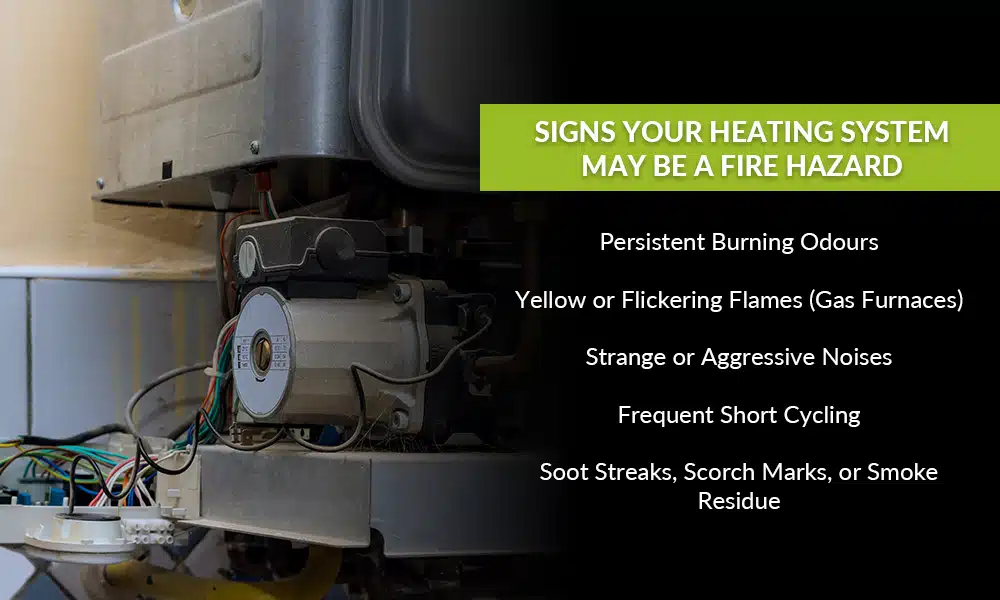
Identifying risks early can prevent the type of fire and smoke damage that requires full restoration later.
- Persistent Burning Odours
A brief burning smell when your furnace is first started up at the beginning of the season is normal. Ongoing odours are not.
They may signal:
- Electrical overheating
- Dust ignition inside the furnace
- Failing components
- Blocked airflow
- Yellow or Flickering Flames (Gas Furnaces)
A healthy flame burns blue. Yellow flames suggest:
- Ventilation issues
- Carbon monoxide risks
- Incomplete combustion
- Strange or Aggressive Noises
Rattling, booming, grinding, or popping sounds may indicate:
- Delayed ignition (can cause small explosions)
- Failing blower motors
- Cracked components
- Frequent Short Cycling
Short cycling is when your furnace turns on and off much more often than it should, usually because it’s overheating or struggling with restricted airflow. This repeated overheating can stress internal components, increasing the risk of ignition or electrical failure. If your furnace is cycling every few minutes, it’s a clear warning sign that something is wrong.
- Soot Streaks, Scorch Marks, or Smoke Residue
Visible soot around vents or furnace cabinets shows incomplete combustion, which is a major safety concern.
Repairing vs. Replacing a Heating System
Knowing when to repair or replace a system helps reduce long-term safety risks.
Age Guidelines
- Under 10 years: Repairs are typically sufficient
- 10–15 years: Repairs still viable, with routine monitoring
- 15–20 years: Consider replacement for safety and efficiency
- 20+ years: Replacement strongly advised
Repairable Issues
- Thermostat malfunctions
- Limit switch failures
- Blower motor issues
- Dirty burners or sensors
- Faulty wiring
Situations Where Replacement is Safer
- Cracked heat exchanger
- Repeated ignition failure
- Burnt wiring
- Visible scorching
- System fails basic safety tests
Modern units improve safety, reliability, and efficiency reducing fire risk significantly.
How Go Pro Restoration Inc. Supports Homeowners After a Heating-Related Fire
If a heating system fire does occur, Go Pro Restoration Inc. provides professional, insurance-compatible fire and smoke damage restoration services to return homes to a safe, livable condition.
- Damage Assessment
Technicians inspect:
- Structural damage
- Smoke and soot distribution
- Contaminated insulation or drywall
- Odour penetration
- Electrical concerns (in coordination with certified electricians)
- Containment & Safety Measures
This may involve:
- Isolating affected areas
- Air filtration and purification
- Soot control
- Fire & Smoke Cleanup
The restoration process includes:
- Removal of burnt debris
- Cleaning or replacement of affected materials
- Odour neutralization
- HEPA vacuuming and air scrubbing
Smoke contamination spreads quickly and can penetrate deep into materials, requiring specialized equipment and chemicals to remove fully. Water used to extinguish the fire can soak walls, ceilings, and flooring, creating ideal conditions for mold growth. In many cases, professional mold removal and remediation in Ottawa is required to fully restore a safe living environment.
- Structural Repairs
Go Pro Restoration Inc. restores damaged areas, which may include:
- Framing/Structural
- Insulation
- Drywall
- Flooring
- Paint and finishing work
- Roofing
- Direct Support with Insurance Claims
The company assists homeowners by:
- Documenting damage
- Providing estimates
- Coordinating with adjusters
- Supplying required reports
The goal is to remove uncertainty and stress from an already overwhelming event.
Fire Prevention Tips for Winter
Taking the following precautions significantly reduces the likelihood of a heating-related fire and, by extension, the need for fire restoration services.
- Schedule Annual Furnace Maintenance
A licensed professional should inspect:
- Burners
- Heat exchangers
- Wiring
- Venting systems
- Safety controls
- Use Space Heaters Responsibly
- Keep 3 feet of clearance
- Plug directly into wall outlets
- Turn off when sleeping or leaving the room
- Maintain a Safe Furnace Room
Keep the area around your furnace clear of:
- Cardboard
- Paints or chemicals
- Clothing
- Storage boxes
- Cleaning supplies
- Ensure Proper Ventilation
- Clear snow and ice from exterior vents
- Keep interior registers unobstructed
- Confirm combustion air intake is accessible
- Keep Alarms Functional
- Install CO and smoke detectors
- Test monthly
- Replace batteries annually
Ottawa Compliance Requirements
Ottawa Fire Services mandates that homes with fuel-burning appliances maintain:
- Working smoke alarms on all levels
- Carbon monoxide detectors near sleeping areas
- Safe clearance zones around heating appliances
- Properly maintained combustion equipment
- Clear exhaust and ventilation pathways
After a fire, restoration work must meet current building and fire safety standards. Go Pro Restoration Inc. provides documentation that supports compliance confirmation when required by insurers or inspectors.
Ottawa Winter Heating Safety Checklist
Before Winter:
- Schedule furnace inspection
- Replace detector batteries
- Clean vents and registers
- Check exterior exhausts
- Inspect chimneys if applicable
During Winter:
- Maintain 3 ft. clearance around heaters
- Avoid power strips for space heaters
- Monitor furnace for unusual smells or sounds
- Change filters every 3 months
After Snowstorms:
- Clear snow from vents
- Check for ice buildup
- Ensure exhaust pipes remain unobstructed
Heating-related fires often start small, but the resulting smoke and structure damage can be extensive, disruptive, and costly. Preventive care is the best defence. When a fire does occur, partnering with a qualified restoration company ensures the home is cleaned, repaired, and restored properly.
If your property has experienced smoke or fire damage this winter, contact the restoration experts at Go Pro Restoration Inc. for a prompt, professional assessment. We’re here to help your home recover fully and safely after a fire-related event.


